The question of whether women can or should preach in the church is not a question. At least it is not one that needs to be asked by any church that is guided by biblical principles. Scripture is clear. Women are called to preach and have been since the dawn of the faith.
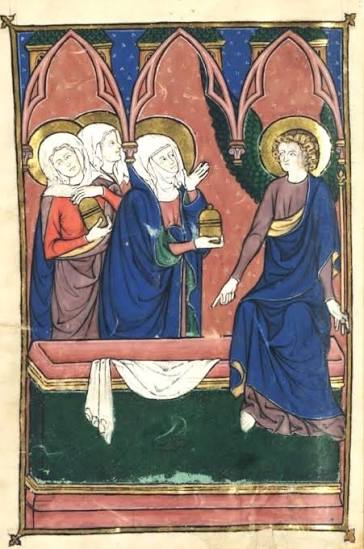
The first obvious evidence is the women at the tomb. As has been pointed out many times before, had they not gone and told the disciples what they saw, the news of the resurrection would have died at the tomb. But they did go and tell the disciples. As it happens, those are the three parts of proclamation; you go into the world, proclaim the gospel, to the church and world. What the women did that first morning is preach and they did it because in the wisdom of divine providence, they were the only ones with the full story that day.
That alone is enough to support a robust biblical argument for women preaching. Yet some still object that there is no direct evidence that Jesus or later Paul gave such permission and therefore women should not preach and should, as Paul famously groused, “be silent in church.” (I Corinthians 14:34-35, I Timothy 2:11-12)
While these passages do seem to give a clear picture, they ignore other passages that argue not only in favor of women as preachers but also look beyond immediate circumstances in a particular community to the larger goal of spreading the gospel to the world.
The first of these passages comes in John’s gospel (20:11-18) when Jesus instructs Mary Magdelene to go and tell the disciples that he has risen from the dead and will ascend to heaven to the right hand of God. He does not tell her to go get the disciples. He commands her to tell them. He instructs her to bear the good news to the disciples and proclaim it to them. In other words, she goes and she proclaims to the church and world. What is that if not preaching? And you notice that Jesus does not tell her to keep her trap shut after that! The implication of the text is that she is now a bearer of the gospel message into the world.
The second passage that clearly shows the call of women to preach comes in Paul’s letter to Rome. Romans is one of the most sublime and important pieces of literature in human history. Whether or not anyone is a Christian, the text itself provides an elegant and eloquent outline of complex human questions about existence, the divine, and our very humanity. It is Paul’s magnum opus and contains his life’s work.
To whom would you entrust such a document?
Paul’s answer is Phoebe, a local businesswoman who was travelling to Rome and carried his letter with her. This tells us two things. First, Paul had evidently gotten over his “women be silent about the gospel” hang-up because he gave his own mature recounting of the gospel to a woman and entrusted her to deliver it to the most important city in the empire. Second, Phoebe was not just a glorified currier. She was a prominent person whose position would open doors for her in Rome that a mere delivery person would not be able to access. Her credibility now underscores Paul’s words. All of that speaks to Paul’s confidence in Phoebe, but that is not all there is in this partnership.
Paul also knew full well that whoever delivered the letter would get questions about it. “What did he mean by…?” “When he says … what is he talking about?” Phoebe was not merely seen as a reliable deliveryperson, she was also a reliable spokesperson for Paul’s theology. In other words, she was trusted with sharing the gospel- preaching!
There are many issues that require robust debate when we turn to scripture for guidance. Whether or not women are invited to preach, teach, lead, guide, or take on any other role in the church is not one of them. It is beyond debate.